In quarrying, mining, and heavy earthmoving operations, productivity is measured in tonnes moved per hour. While operators often focus on machine availability and fleet utilisation, one of the most overlooked factors affecting profitability is the quality of the bucket attached to the machine.
A wheel loader bucket is much more than a container for moving material. It directly influences production rates, fuel consumption, maintenance costs, machine wear, and overall site efficiency. Investing in a high-quality bucket can deliver substantial long-term savings while increasing output across your operation.
The Bucket Is Your Primary Production Tool
Every tonne of material loaded, stockpiled, fed into a crusher, or transported across site passes through the bucket. If the bucket design is poorly suited to the application, operators will experience reduced fill factors, increased cycle times, and unnecessary wear on both the attachment and machine.
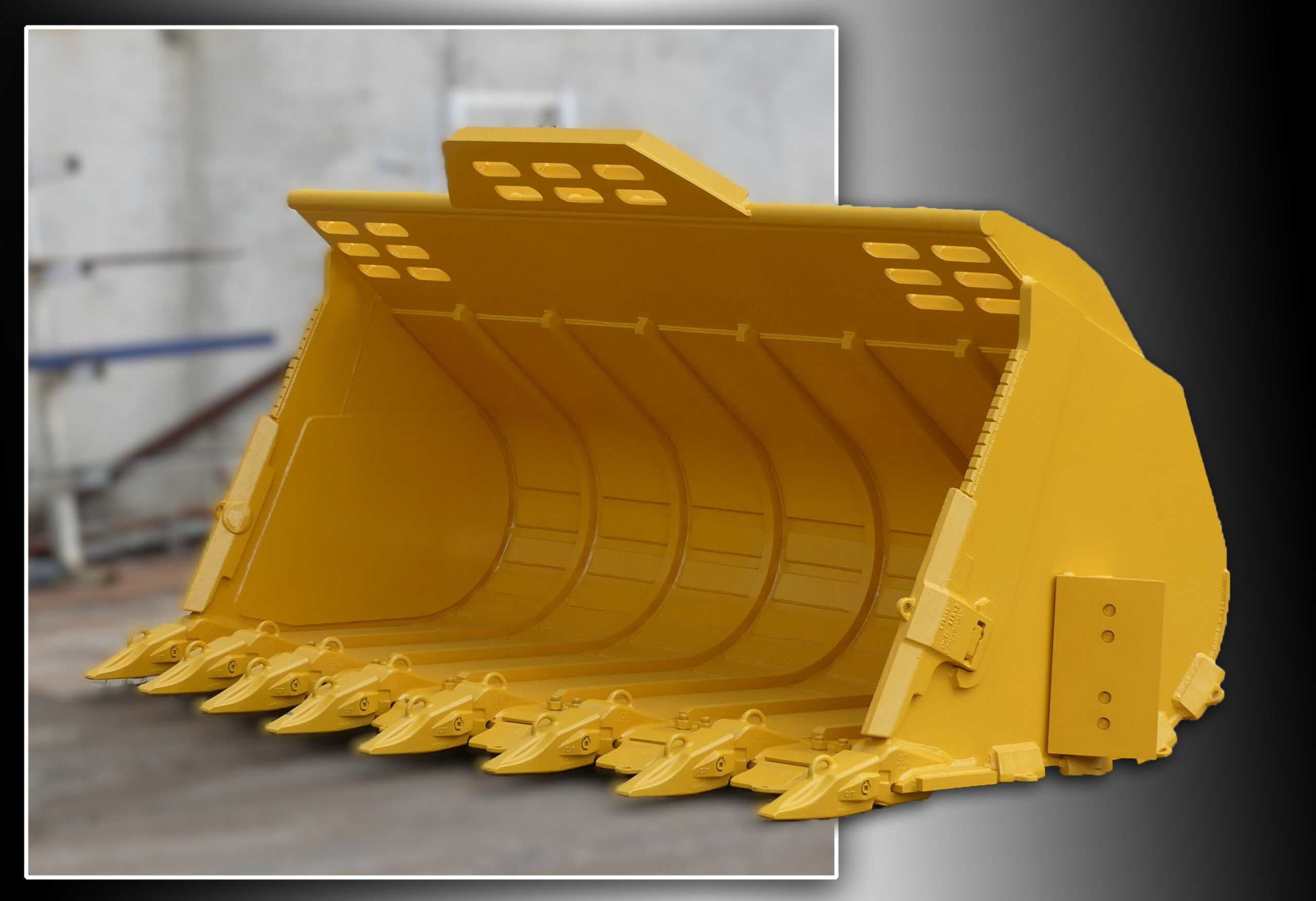
A properly engineered quarry bucket is designed to:
- Maximise material retention
- Achieve optimum fill factors
- Improve penetration into material piles
- Reduce cycle times
- Increase tonnes moved per hour
- Minimise machine strain
Even small improvements in bucket performance can result in significant productivity gains when multiplied across thousands of operating hours each year.
Higher Payloads Mean Higher Productivity
A well-designed bucket maximises the amount of material moved during each loading cycle.
When bucket geometry, cutting-edge design, side profiles, and wear package placement are engineered correctly, operators can consistently achieve higher fill factors without increasing cycle times.
For example, if a loader completes 250 loading cycles per day and improves bucket fill by just 5%, the result can be hundreds of additional tonnes moved each shift without adding labour, fuel, or machine hours.
Over months and years, these gains can have a substantial impact on site profitability.
Reduced Wear Lowers Operating Costs
Wear is unavoidable in quarry and mining environments. However, the quality of bucket construction and wear protection determines how quickly that wear occurs.
A high-quality bucket incorporates:
- Heavy-duty wear plates
- Heel wear plates
- Side protection systems
- Lip protection
- Ground Engaging Tools (GET)
- Internal wear liners
These components protect the parent structure from excessive abrasion and impact damage, which improves the life of the bucket.
While comprehensive wear packages require greater upfront investment, they significantly reduce repair frequency, component replacement costs, and downtime which in turn increases profitability.
Less Downtime Means More Revenue
When a bucket fails unexpectedly, production stops.
Cracked structures, worn edges, damaged sidewalls, and excessive wear can result in:
- Unscheduled maintenance
- Emergency repairs
- Lost production
- Idle equipment
- Increased labour costs
In high-production environments, the cost of downtime often exceeds the cost of repairs themselves.
A robust bucket designed specifically for the application helps minimise unscheduled maintenance and keeps machines operating where they generate value: on the job site.
Lower Fuel Consumption
Many operators are surprised to learn that bucket design directly affects fuel efficiency.
An inefficient bucket may:
- Struggle to penetrate material
- Require multiple loading attempts
- Increase wheel spin
- Create excessive resistance during digging
A correctly designed bucket enters the pile more efficiently, fills more effectively, and reduces unnecessary machine effort.
The result is lower fuel consumption per tonne moved and improved machine efficiency.
With fuel representing one of the largest operating expenses for many quarry and mining operations, even modest reductions can deliver significant annual savings.
Protecting Your Loader Investment
A wheel loader represents a major capital investment. Excessive bucket weight, poor balance, and unsuitable designs can place unnecessary stress on key machine components.
A properly engineered bucket helps reduce strain on:
- Lift arms
- Linkages
- Hydraulic systems
- Pins and bushes
- Tyres
This can contribute to longer equipment life, reduced maintenance costs, and increased tonnes moved per hour.
Customisation Matters
No two sites are exactly the same.
Material density, rock size, abrasiveness, loading conditions, production targets, and machine specifications all influence bucket performance.
That’s why many operations are moving away from generic bucket designs and investing in custom-engineered solutions suited to their specific requirements.
Customisation options may include:
- Capacity optimisation
- Specialised wear packages
- Alternative GET systems
- Reinforced structures
- Application-specific wear protection
A bucket built for your site will almost always outperform a standard off-the-shelf alternative.
Investing in Productivity
High-quality buckets are not simply attachments. They are production tools that directly affect profitability across the entire operation.
By increasing payloads, reducing downtime, improving wear life, lowering fuel consumption, and protecting valuable equipment, a well-engineered bucket can deliver returns that far outweigh its initial cost.
Whether you’re operating in quarrying, mining, recycling, construction, or bulk material handling, investing in the right bucket is one of the most effective ways to improve productivity and reduce operating costs.
Looking for a Custom Bucket Solution?
Our team designs and manufactures heavy-duty quarry buckets, rock buckets, mining buckets, stemming buckets and wheel loader attachments tailored to your specific application. From comprehensive wear packages and specialised GET systems to fully customised bucket designs, we build solutions engineered to maximise productivity and deliver long-term value.
Contact us today to discuss a bucket solution designed specifically for your operation.